

The 3rd International Symposium on Green Technologies and Applications
(ISGTA’26)
December 21-23, 2026 – Faculty of Sciences, University of Gabes, Tunisia
Hybrid: In-person and Virtual Symposium
Paper Submissions
30 September, 2026
Notification
30 October 2026
Camera Ready & Registration
30 November 2026
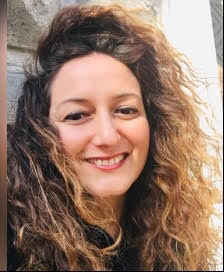
Dr. Marta Chinnici
Dr. Marta Chinnici graduated magna cum laude in Mathematics in 2004 from the University of Naples (Italy), where she also obtained her PhD in Mathematics and Computer Science in 2008.
She is currently a Senior Researcher at ENEA, within the Department of Energy Technologies and Renewable Energy Sources, ICT Division – HPC Lab. Her work focuses on the study, analysis, and development of ICT solutions, with particular emphasis on energy efficiency and sustainability of Data Centers (DC), High-Performance Computing (HPC), large-scale data management, data science, and digital twin technologies.
Dr. Chinnici serves as an Expert for the European Commission, acting as reviewer and evaluator in ICT and computer science across several European programs. She is scientific coordinator and project manager for ENEA in numerous EU and national initiatives (including PNRR – Rome Technopole). She is also ENEA Representative in the DTC-Lazio Management and Coordination Committee.
She is actively involved in the international scientific community, regularly serving as chair and co-chair of important international conferences and workshops, as well as a member of Technical Programme Committees. She has also delivered numerous invited talks and keynote presentations at national and international events.
Her recent research activities focus on the application of High-Performance Computing (HPC), large-scale data management, and Digital Twin technologies to cultural heritage, supporting its preservation, management, and valorization through advanced computational and data-driven approaches.
In addition, she serves as editor, referee, and editor-in-chief for leading scientific journals. She is the author of books, peer-reviewed scientific articles, essays, and has delivered numerous presentations at national and international conferences.
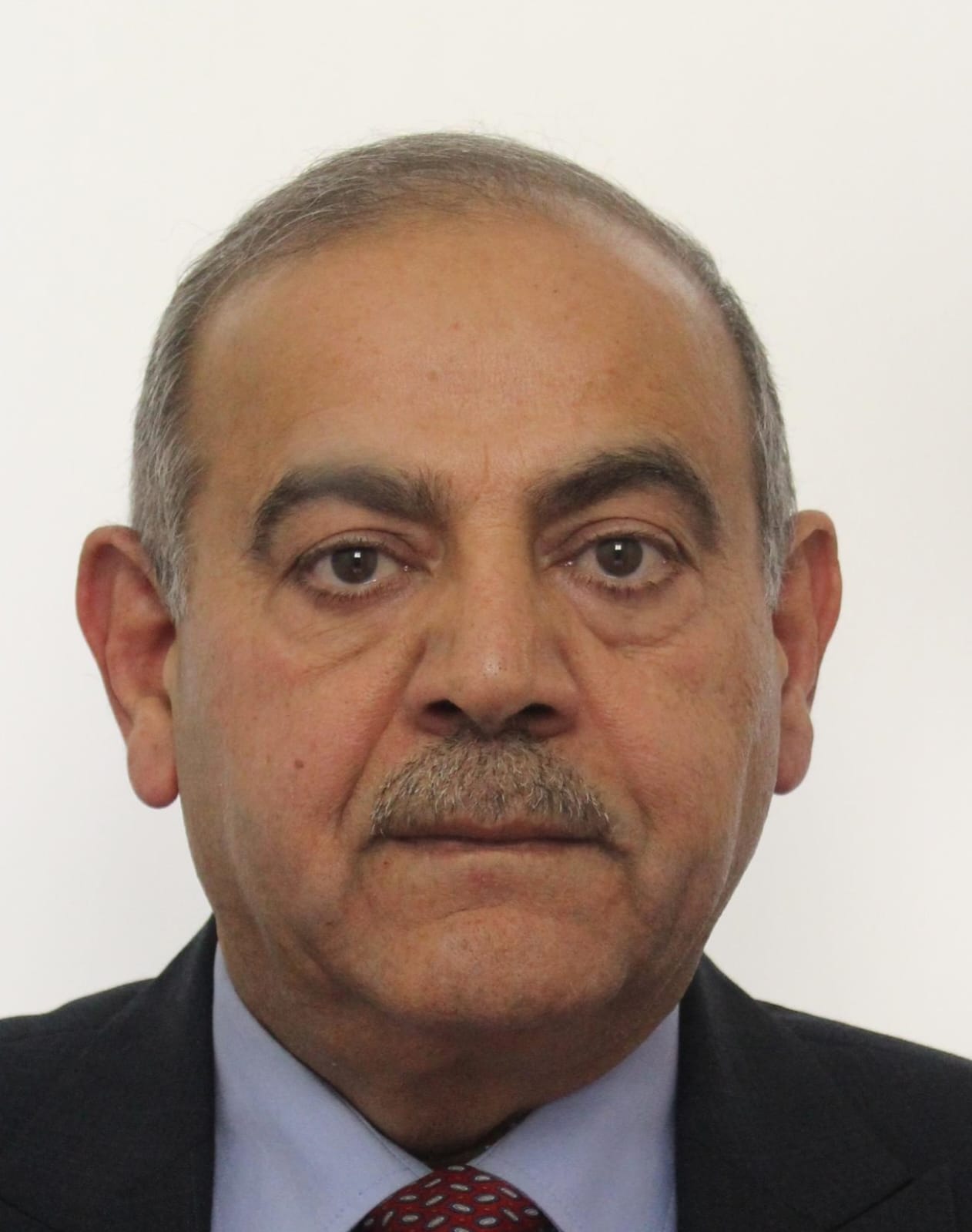
Pr.Abdul Salam Darwish
- Prof Abdul Salam Darwish is a Professor in the School of Engineering and Built Environment at the University of Greater Manchester, UK. He has extensive expertise in engineering, renewable energy, artificial intelligence, environmental management, strategic management, and aeronautical engineering. His teaching portfolio spans higher education, including Green Technology Design and Management, with emphasis on applied engineering, sustainability, innovation, and management. Alongside his UK role, Prof Darwish is a Professor and Programme Leader at Excelia Group, La Rochelle Business School, France, where he has taught since 2014. His teaching focuses on strategic management tools and techniques, international strategic management, and production management, reflecting his interdisciplinary profile across engineering, business, and sustainability. Prof Darwish has a strong record of research supervision and academic leadership. He has successfully supervised 32 PhD candidates, more than 150 master’s dissertations, and a comparable number of undergraduate research projects. He is currently supervising 11 PhD students and contributes to academic quality assurance as an examiner. His research interests include renewable energy, wind energy system design and management, artificial intelligence applications, aerodynamics, environmental management, and strategic management. Prof Darwish holds qualifications in mechanical engineering, aeronautics, and education from institutions in Iraq and the UK, including Cranfield Institute of Technology, the University of Reading, and the University of Huddersfield. He also holds professional diplomas in business, environmental, and quality management. With more than 37 years of experience, Prof Darwish has contributed to developing mechanical, aeronautical, environmental, and renewable energy laboratories. Prof Darwish is recognised for his contribution to renewable energy and sustainable development. He serves as Chairman of the Wind Energy Committee within the World Renewable Energy Network, UK. He has organised and participated in conferences, seminars, and workshops, and is active as a co-editor, reviewer, and contributor to academic journals and books. He has published more than 150 research papers and contributed chapters to three academic books 50%

Green by Design: Energy-Aware Distributed Sensor Systems as the Backbone of Sustainable IoT
- Olfa KanounFull Professor for Measurement and Sensor TechnologyFaculty of Electrical Engineering and Information TechnologyChemnitz University of Technology, Chemnitz, GermanyThe rapid growth of the Internet of Things promises transformative gains in environmental management, smart agriculture, industrial efficiency, and urban sustainability. Yet this promise carries a fundamental contradiction: deploying billions of sensor nodes and not taking care of their energy consumption generates a significant and growing demand for power, working against the intended sustainability goals of green IoT. Achieving a truly green IoT requires therefore sensors and sensor networks that are power-aware at every level from the choice of sensing principle and signal processing to communication protocol and system design reducing consumption, recovering energy from the environment wherever possible, and smartly managing available energy. Energy-aware distributed sensor systems resolve this contradiction at its root. Energy awareness goes beyond harvesting from ambient sources such as solar radiation, mechanical vibration, and thermal gradients. It spans the entire system chain: low-power sensing principles, smart energy management, energy-efficient communication, and adaptive processing matched to available resources. Together, these strategies reduce battery dependency, extend operational lifetime, and enable dense, reliable deployments across wired and wireless networks in locations where grid power is unavailable.This lecture presents recent developments in energy-aware distributed sensor systems, covering piezoelectric, electrodynamic, and magnetoelectric energy converters, autonomous wireless sensor networks, electrochemical sensors for water and soil quality, and machine-learning-enhanced multi-sensor data fusion. Applications in precision agriculture, flood surveillance, pollutant detection, and structural health monitoring show how green-by-design sensing translates directly into actionable environmental intelligence. The talk closes with a perspective on self-sufficient, AI-enabled distributed sensor systems as the green backbone of a sustainable IoT ecosystem. Olfa Kanoun is Full Professor for Measurement and Sensor Technology at Chemnitz University of Technology, Germany, where she leads the Laboratory for Measurement and Sensor Technology (MST). Her research focuses on energy-autonomous wireless sensor systems, impedance spectroscopy, electrochemical sensors for environmental and biomedical applications, and flexible nanocomposite sensors. She is a Senior Member of IEEE, Distinguished Lecturer of the IEEE Instrumentation and Measurement Society, and recipient of the 2022 IEEE IMS Technical Award for pioneering the evolution of impedance spectroscopy from laboratory scale to field sensors. In 2025, she received the President of the Republic of Tunisia’s Award for the Best Tunisian Researcher Living Abroad. Ranked among the world’s top 2% most-cited scientists, she has published over 850 peer reviewed publications and 14 books. 50%